
Microbiome Insights - Vedanta Bio
Introductions
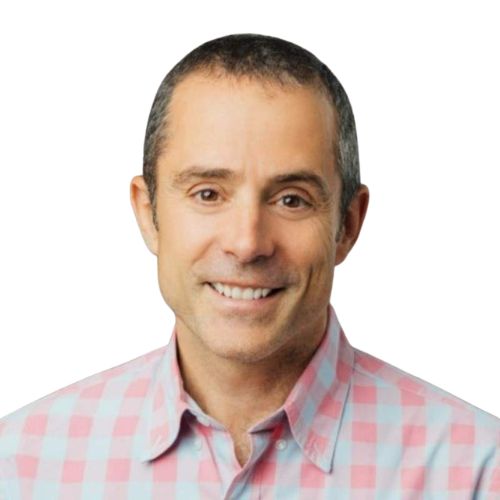
Dr. Bernat Olle is Founder and Chief Executive Officer of Vedanta Biosciences, where he has pioneered the development of defined bacterial consortia as a new class of oral therapeutics. A recognized leader in the microbiome field, he has co-authored influential research published in leading journals including Nature, JAMA, Nature Medicine, and Nature Biotechnology. Prior to Vedanta, he spent a decade in biotech venture creation at PureTech Health. Dr. Olle has served on multiple boards and advisory committees and has received numerous innovation awards. He holds a B.S., M.S., Ph.D., and M.B.A. from leading institutions including MIT and MIT Sloan.
Vedanta recently secured $60 million in funding while advancing its Phase 3 VE303 program. What do you think this momentum says about the current state of investor confidence in the microbiome field?
In my view, and given the stage of development, this recent financing round reflects what the participating investors believe about the probability of success of the pivotal trial for this specific product and its commercial potential, rather than reflecting a view of the microbiome field at large.
What do you see as the biggest challenges microbiome companies face when seeking investment, strategic partnerships, and commercial success today?
The main challenge, from an investment point of view, is that there has not been a large commercial success, yet. There are a variety of reasons for that, but this is what it all boils down to.
On the one hand, there has been one tangible contribution of the field to ameliorating human disease: the successful use of FMT and FDA-approved Fecal Microbiota Products for the prevention of recurrences of C. difficile infection. Today, gastroenterologists and infectious disease doctors are already prescribing these products, and their arrival has changed how these specialists manage this disease that affects hundreds of thousands worldwide. This accomplishment should not be diminished.
On the other hand, there is a hope and expectation that microbiome-targeted therapeutics will show reproducible efficacy for the management of other diseases, and that Live Biotherapeutic Products will reach approval as a new drug modality, as well. But neither has occurred yet. When that happens, you can expect a broader impact of the field in medicine and more pharmaceutical companies – which have largely shunned commercialization of products made from feces - embracing the approach.
As the microbiome industry matures, what factors will be most important for creating sustainable commercialization models for LBPs and FMT-based therapies?
First and foremost, showing reproducible, clinically meaningful efficacy, in other diseases with high unmet need. There is no substitute for that.
Then, for LBPs, having a few approvals that create a blueprint for what regulatory agencies expect.
For FMPs, it will be important to find ways to reduce their high manufacture costs. In addition, it would be helpful for regulatory agencies to harmonize their approaches (the US was first to set a precedent for regulating such products -as biologics-, but then the EU has taken a completely different approach, regulating them as substances of human origin. This lack of harmonization makes things hard for sponsors.
What are you most looking forward to discussing with the microbiome community at the 11th Microbiome Movement USA Summit?
I am looking forward to catching up with colleagues working in the field and learning from their experiences.
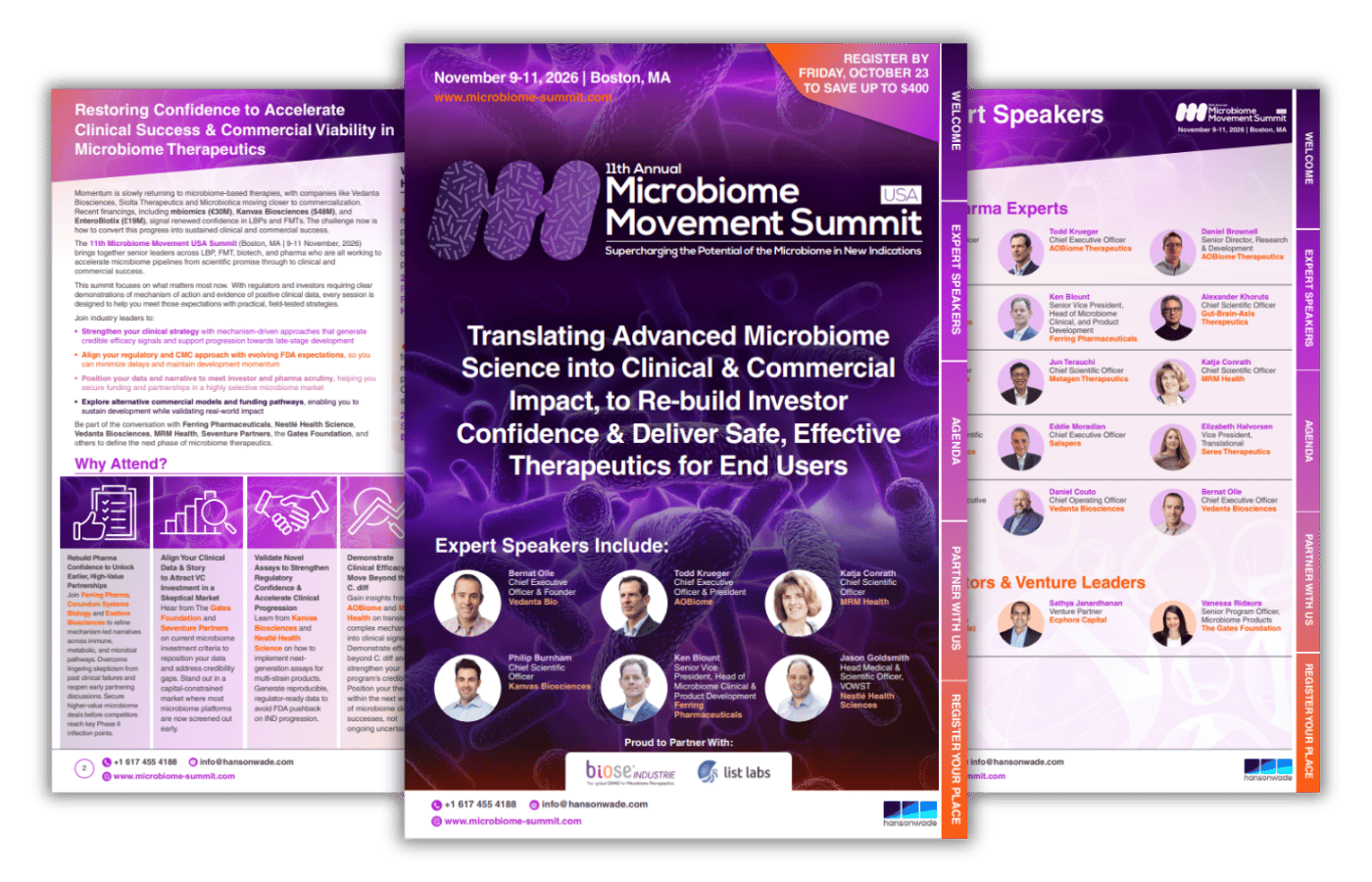
Explore the 2026 Event Guide
- Join >80% C-level, VPs, and Directors to identify and connect with key opinion leaders in the microbiome space
- See the LBP and FMT coverage to pinpoint sessions most relevant to your program
- See active investors and strategic partners attending to refine your funding and partnering strategy
- Pharma insights from Ferring and ex-Takeda leaders to understand how to secure pharma support
- Learn from Vedanta, MRM Health, and AOBiome to overcome clinical setbacks and scale microbiome-based therapies
Explore the Agenda
Dive into real-world strategies tackling microbiome credibility, clinical efficacy, and regulatory hurdles so you can move your program forward with confidence.
Partner With Us
Position your solution at the centre of microbiome dealmaking as biotechs actively seek partners to validate, fund, and scale their programs.
Join Biopharma Experts
Connect with microbiome leaders across R&D, CMC, and BD to exchange insights, overcome shared challenges, and build partnerships that accelerate clinical and commercial success.