
Microbiome Insights - Exeliom Biosciences
Introductions
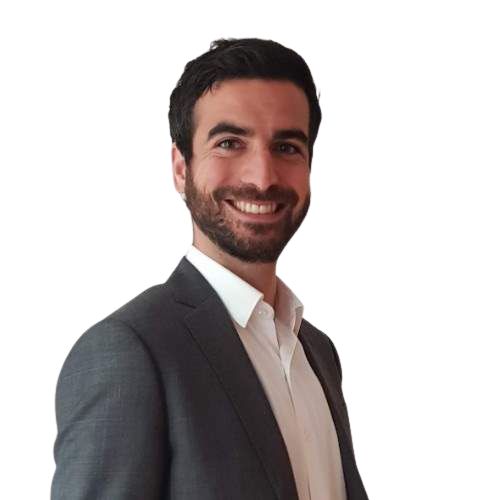
I am the CEO and Co-founder of Exeliom Biosciences. My background combines finance, investment banking, and life sciences. In 2016, I co-founded Exeliom together with Prof. Harry Sokol, Dr. Philippe Langella, and Prof. Patrick Gervais, with the ambition of translating cutting-edge microbiome science into innovative therapeutics. Our approach focuses on a single bacterial-derived immunomodulator for which we have identified key mechanisms of action, including the effector molecule, its receptor, and the immune cells involved. Our lead program, EXL01, is currently being evaluated in a randomized Phase 2 study in advanced gastric cancer as an oral add-on to immune checkpoint inhibitors and chemotherapy, with the goal of improving response durability and ultimately extending patient survival. EXL01 is also being investigated in three additional oncology studies across different tumor types and treatment settings.
What do you see as the biggest challenges facing microbiome companies as they seek investment and strategic partnerships today?
The biggest challenge is not unique to microbiome companies, but it is particularly acute in this field. There is a structural financing gap when it comes to funding adequately powered, randomized, placebo-controlled studies.
Raising the initial capital needed to reach IND and generate early clinical data is often achievable. Likewise, large financings can be secured once robust randomized data demonstrate clinical benefit. The difficult step is funding that first well-powered randomized study, especially when the therapeutic modality, target, or mechanism lacks prior validation from pharma.
This challenge is amplified in microbiome therapeutics because effects are often observed over longer periods, requiring larger, longer, and therefore more expensive clinical trials.
How can microbiome developers better demonstrate the value of their science to potential pharma partners?
The most convincing evidence comes from well-designed randomized placebo-controlled studies with sufficient statistical power. Beyond efficacy, companies need to provide a clear mechanistic understanding that supports biomarker development and patient selection strategies.
A strong safety profile is also critical, as is demonstrating a scalable and reliable manufacturing process. The difficulty is that generating all of this evidence requires substantial resources, while many microbiome companies remain relatively underfunded.
What role do mechanistic and early clinical data play in building credibility with investors and pharma stakeholders?
They play an absolutely critical role. Pharma partners increasingly expect translational evidence that can link observed clinical outcomes to the drug candidate being tested. Without a credible mechanistic framework, that connection becomes much harder to establish.
For clinical data, context matters. Data from a small single-arm study involving a heterogeneous patient population do not provide the same level of confidence as data from a randomized study in a more homogeneous population. Today, clinical data are no longer optional. The key questions are the quality of the study design, the relevance of the endpoints, the statistical power, and the characteristics of the patient population being evaluated.
What are you most looking forward to discussing with your peers at the 11th Microbiome Movement USA Summit?
I am particularly looking forward to discussing the wave of clinical data expected to emerge over the next 18 months. I believe these results will be critical in shaping the future of the microbiome field, helping the industry better understand which approaches can deliver meaningful clinical benefit and create value for patients, investors, and pharma partners alike.
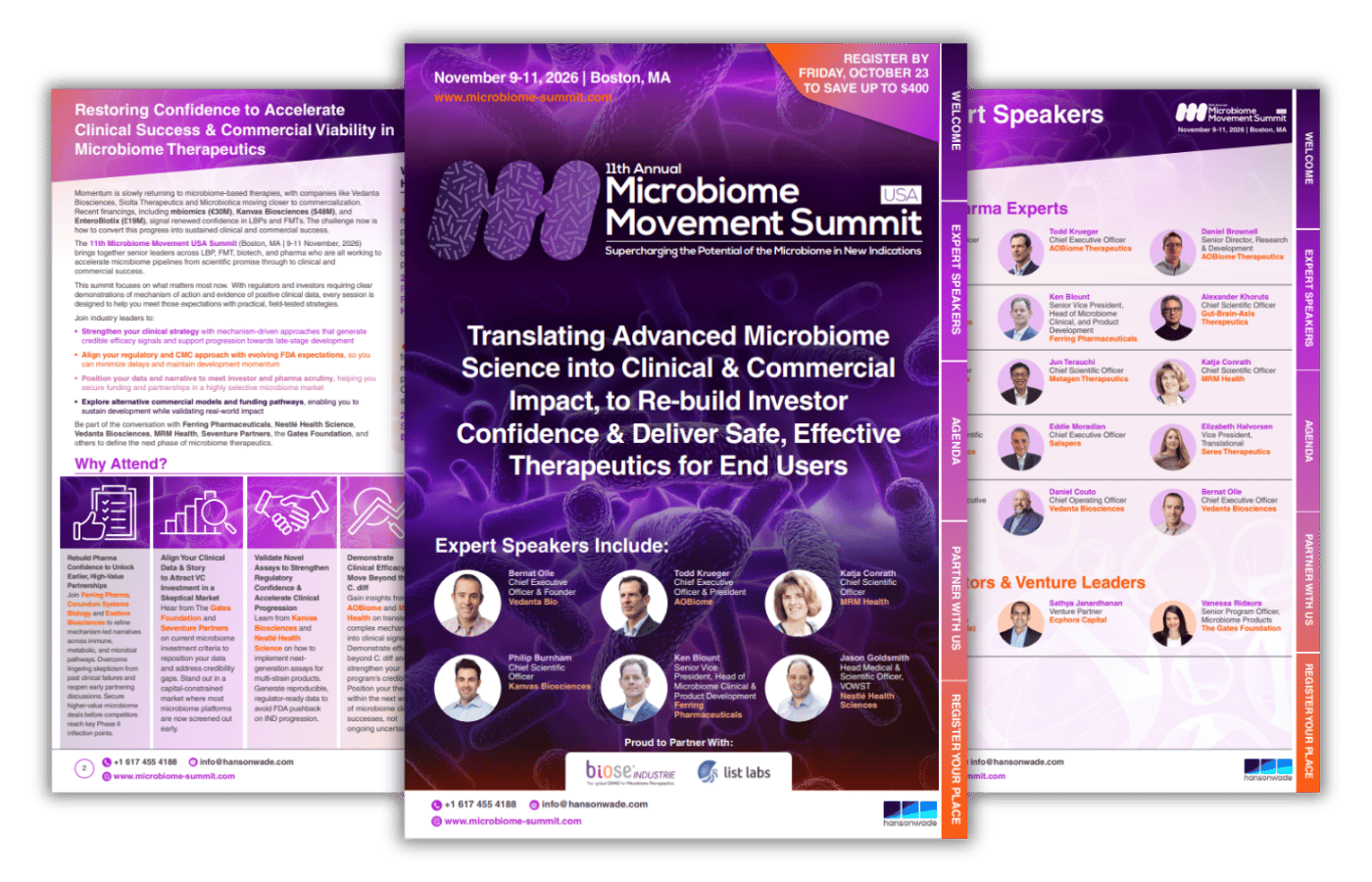
Explore the 2026 Event Guide
- Join >80% C-level, VPs, and Directors to identify and connect with key opinion leaders in the microbiome space
- See the LBP and FMT coverage to pinpoint sessions most relevant to your program
- See active investors and strategic partners attending to refine your funding and partnering strategy
- Pharma insights from Ferring and ex-Takeda leaders to understand how to secure pharma support
- Learn from Vedanta, MRM Health, and AOBiome to overcome clinical setbacks and scale microbiome-based therapies
Explore the Agenda
Dive into real-world strategies tackling microbiome credibility, clinical efficacy, and regulatory hurdles so you can move your program forward with confidence.
Partner With Us
Position your solution at the centre of microbiome dealmaking as biotechs actively seek partners to validate, fund, and scale their programs.
Join Biopharma Experts
Connect with microbiome leaders across R&D, CMC, and BD to exchange insights, overcome shared challenges, and build partnerships that accelerate clinical and commercial success.